Wirewolf / Starlink installation in Milton
Milton · Campbellville · Brookville · Kilbride · Moffat · Nassagaweya · Halton Hills · Georgetown · Acton
$449 flat for a standard roof or gable mount, zero travel fee — Milton sits in our free Zone A. Installed by a certified AV field engineer, not a subcontractor who leaves once the dish points at open sky — because a dish that talks to the satellite and a house that actually has Wi-Fi in every room are two different jobs.
// Most quotes answered within the hour, seven days a week
Central Milton is not short on internet. Fibre and cable run through most of the newer subdivisions south of the highway, and if that's where you live and it's working, we're not going to talk you into a $449 Starlink install you don't need — we'll say so on the phone before you book anything. The properties we actually go out to sit north and west of that line: up on the escarpment above town, out through Campbellville and Brookville, along the Nassagaweya concessions, and the stretch of Halton Hills between Georgetown and Acton where the fibre map is a lot more confident than the actual line at the end of the driveway.
That rural belt is bigger than the postal code suggests. Nassagaweya alone covers a grid of concessions where cable simply stops — you can be five minutes from a serviced subdivision and still be looking at a phone line from the 1990s. Kilbride and Moffat sit in the same spot, close enough to town that people assume they're covered and far enough out that they're not. Same story in Halton Hills: Georgetown's built-up core has fibre, and the properties strung out toward Acton and the open country between often don't.
Three things come up constantly on these jobs. Escarpment terrain. A lot of the ridge properties above Milton and around Campbellville sit right on the Niagara Escarpment, and between the drop and the tree cover a roof mount can't always see enough open sky — we survey first and move to a pole mount when it needs it. Hobby farms and horse properties, which are common out this way — the house gets a clean signal and the barn forty metres off gets nothing, because Wi-Fi doesn't travel through a hundred feet of hay and steel siding; that's an Ethernet drop, not a stronger router. And new-build estate lots on the fringe of the serviced area, where the subdivision two streets over has fibre and the new build on five acres does not, because nobody told the buyer that before they closed.
Most Starlink installers are dish installers, full stop. They get the kit, run a cable, mount it, point it at a clear patch of sky, and leave once the app shows green. That's a fine afternoon for whoever ordered the kit and a bad one for whoever tries to get online from the bedroom at the far end of the house, or the shop out back, or the loft over the garage. We hear the same complaint on almost every callback job, regardless of who installed the original dish: the signal doesn't reach past one room.
Wirewolf isn't a dish company that also does networking — it's the other way around. We're an AV and control-systems outfit first: certified field engineer, control-system programmer, years running satellite and rural install work for Bell before Starlink existed. The dish is the easy 20 minutes. What actually determines whether your property has usable internet is everything after it — mesh nodes placed by someone who understands RF, not just distance; PoE access points where a plug-in extender won't cut it; proper Ethernet runs to the barn, the shop, the bunkie, the second building, instead of hoping a signal punches through steel and hay; cable dressed and secured along a wall instead of zip-tied wherever it happened to reach.
A recent Milton job makes the point. Two houses on one rural property, each needing its own Starlink — standard roof mounts on both, no pole needed once we checked the sky view. Wiring the second house properly meant a 150 ft custom cable run, clipped along the facade and routed inside rather than drilled through wherever was convenient, plus three mesh Wi-Fi nodes split across both buildings for coverage that actually reaches every room, not just the one closest to the dish. That's the job in full: two dishes, one clean cable run, and a network that covers the whole property instead of half of it.
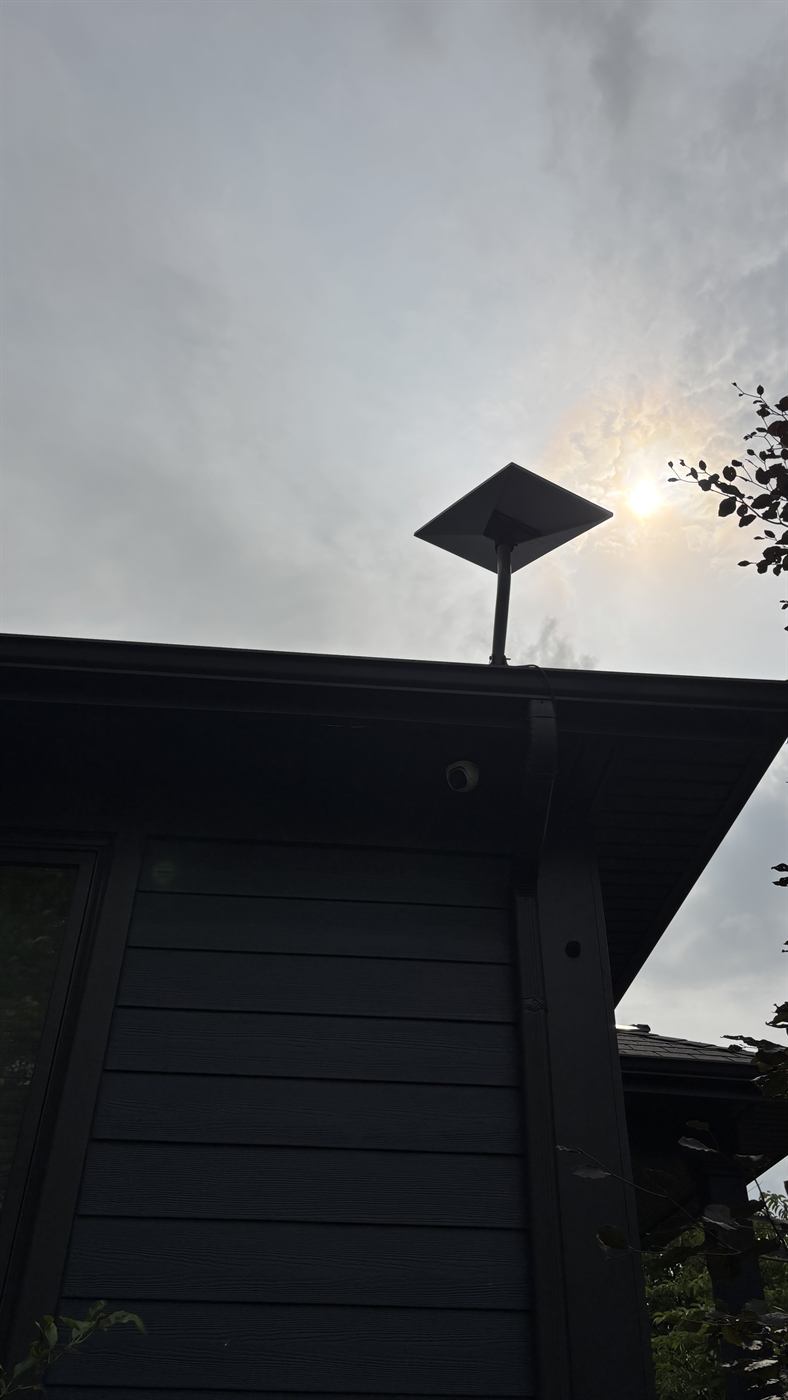
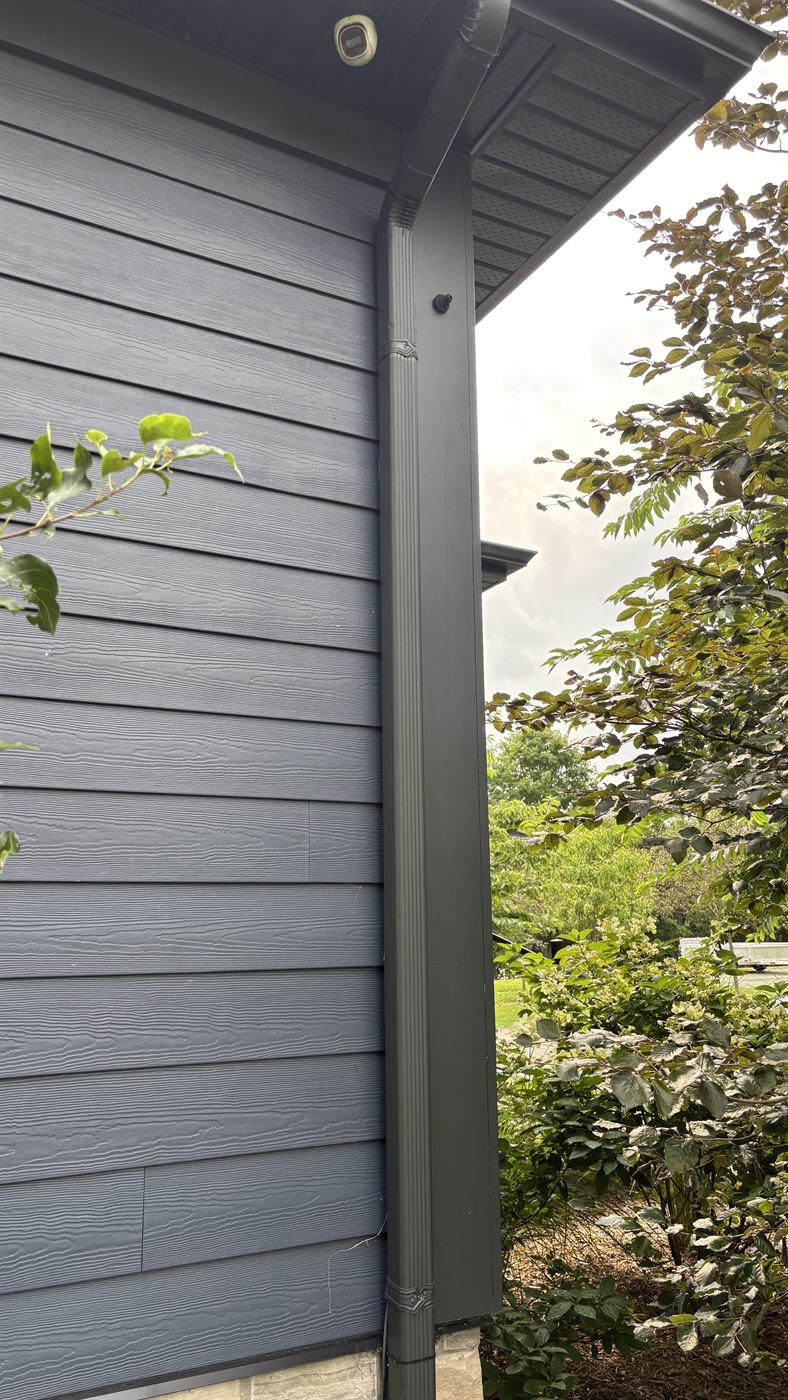
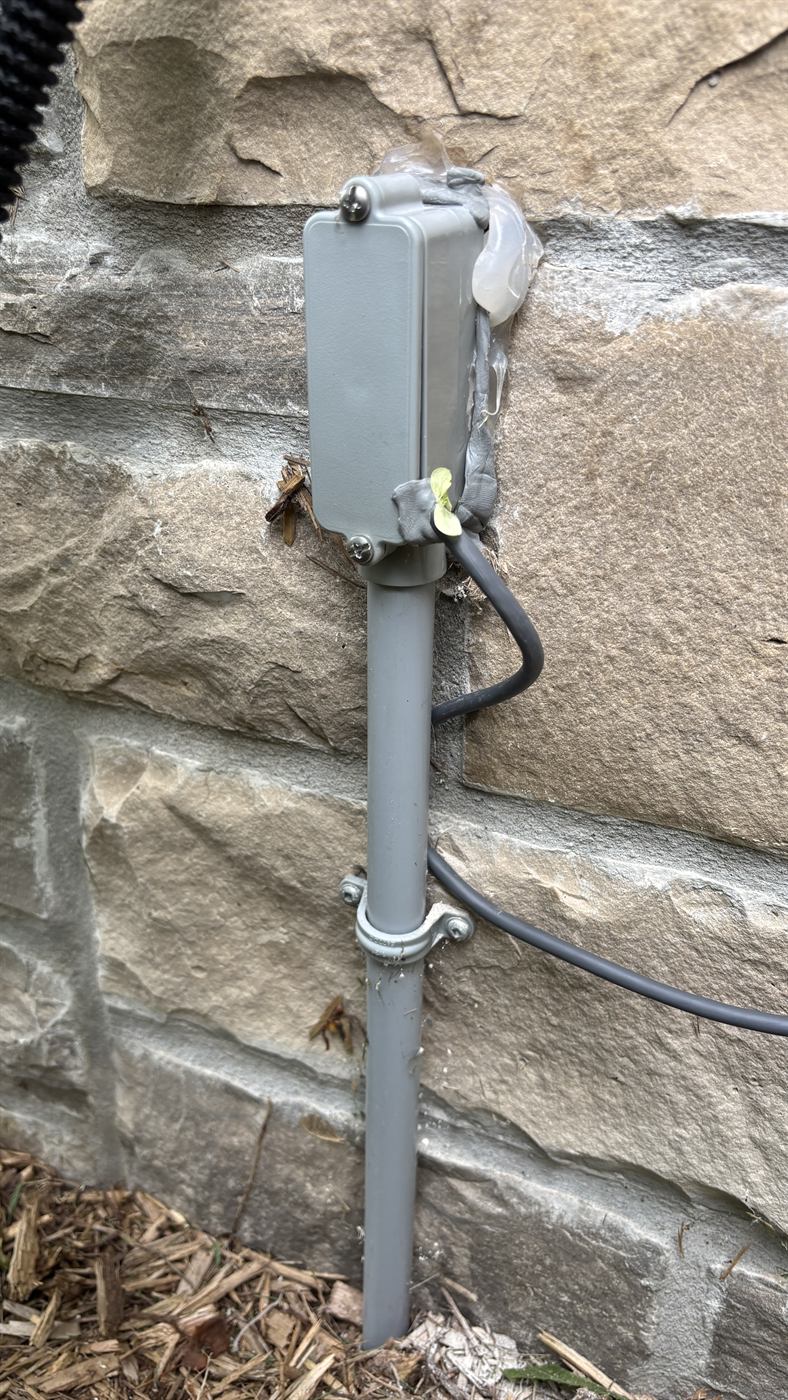
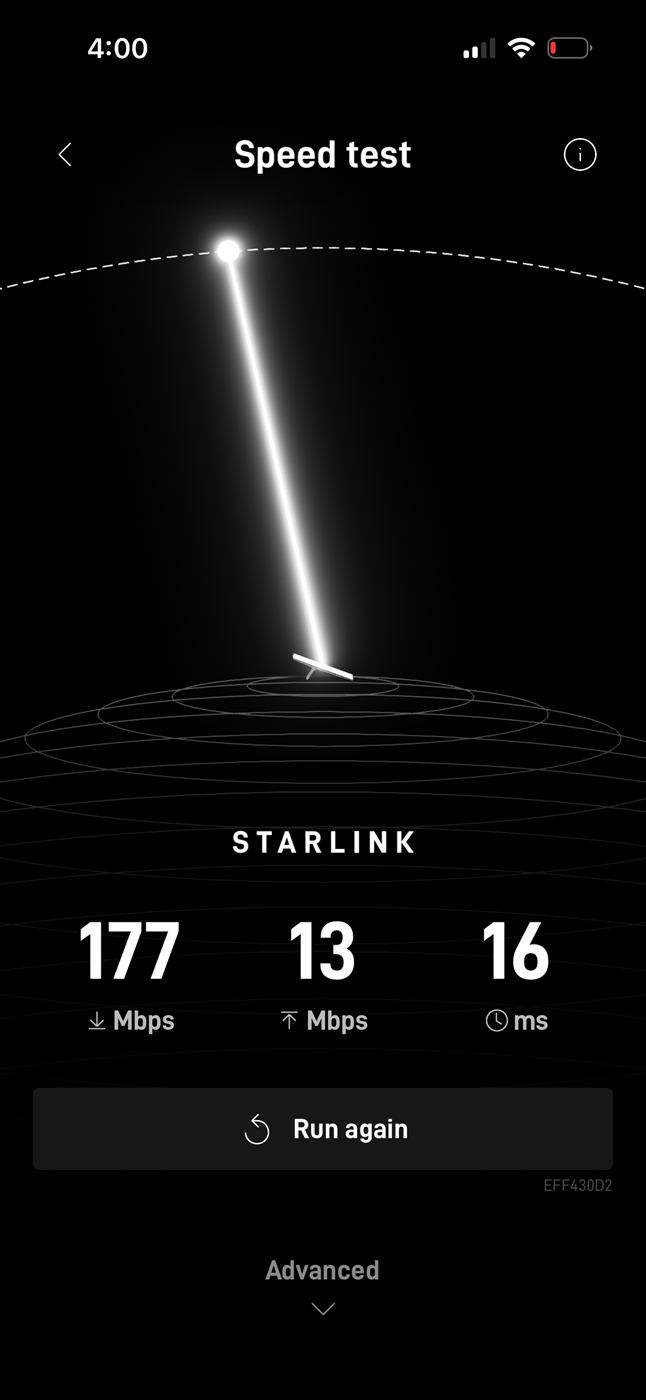
// Photos from the job, August 2026. Published with the owner's permission.
Competitors quote “from $550” and will not tell you the real number until a tech is standing in your driveway. Here is ours, in advance.
// Prices in CAD before HST. No kit yet? We can source a genuine Starlink kit and the official mounts through authorized Canadian retail and bring them on install day — billed at cost with the receipt in your hand, no markup. Most installers will not book you until the dish is already in your hallway; we would rather do it in one visit. The subscription itself activates on your own Starlink account. Already have a kit? Even easier. Mesh Wi-Fi hardware and custom cable materials are billed at cost with the receipt shown.
// Two properties in one visit? $100 off when we book two installations on the same trip — ask when you text.
// Milton sits in our Zone A — travel is free from 0 to 50 km. See the full travel zone breakdown if you're calling from further out.
Urban Milton: the newer subdivisions south of the 401 and around the downtown core mostly have fibre or cable already, so most of what we do inside town is mesh Wi-Fi, PoE access points and smart-home wiring rather than a satellite dish — if that's actually what's on your list, the mesh add-on above covers it.
The rural belt: Campbellville, Brookville, Kilbride and Moffat, the Nassagaweya concessions, and the stretch of Halton Hills running through Georgetown and Acton. This is where Starlink earns its keep — flat $449, and because Milton and the towns around it sit inside our Zone A, travel is free either way. For a wider look at what actually works out here versus in town, see our guide to rural internet in Ontario.